-
Cart
No items added to cart
Subtotal {{ currencyFormat( getSubtotal() ) }}Continue -
Sign in
-
Book Service
No items added to cart
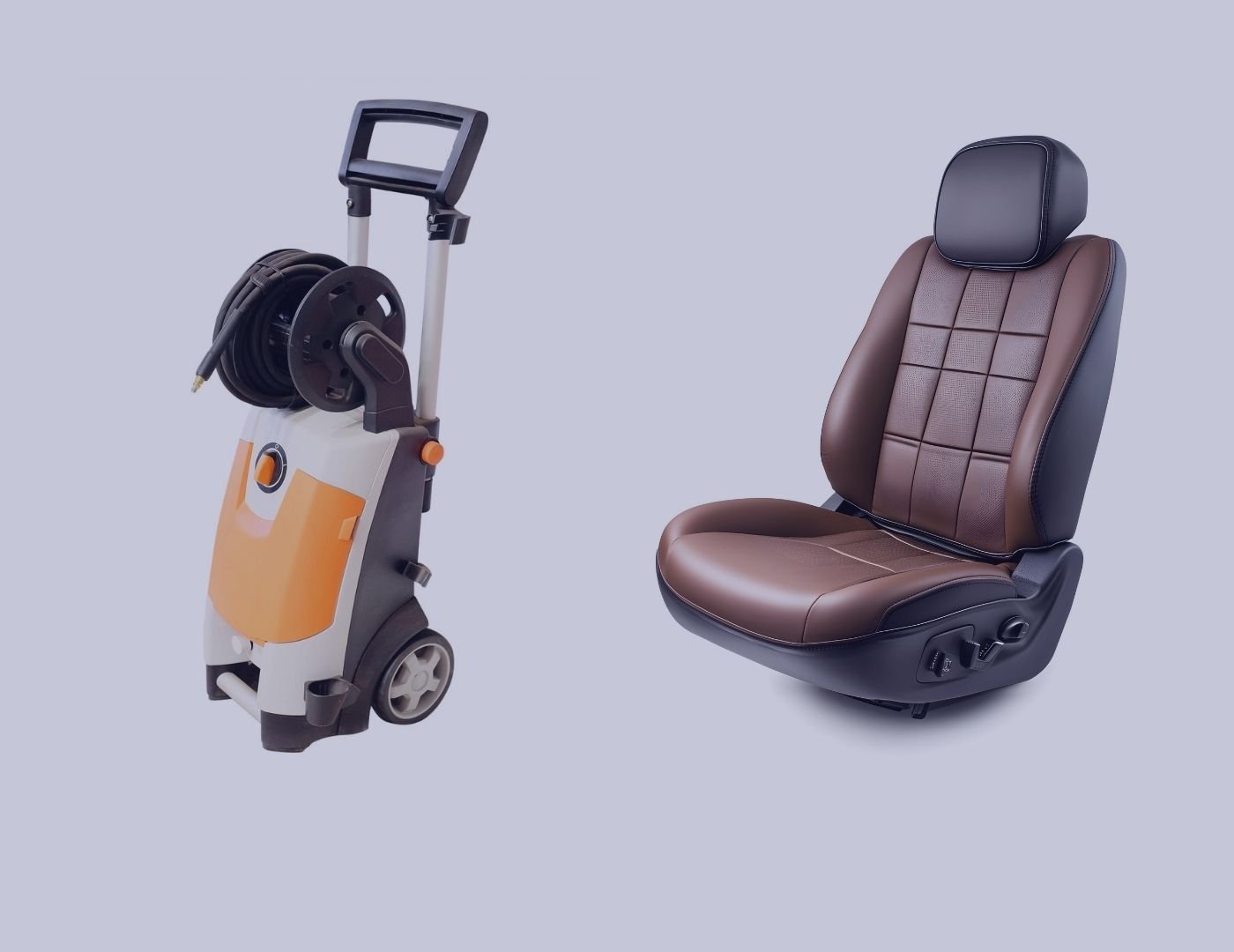
Pressure washers are brilliant for blasting mud off wheels and arches — but what about your car seats?
It’s tempting, especially when you see satisfying TikToks of soaked upholstery turning spotless…
But before you reach for the trigger, here’s what the pros want you to know.
A. Core idea: Don’t directly pressure-wash car seats — use controlled extraction or steam instead.
B. Quick answer: Pressure washing can soak the foam, cause mould, odour, or electrical damage.
C. Better option: Wet-vac extractor or steam cleaner (£80–£150 service, or DIY kits £50–£100).
D. Exception: Seat covers, removable mats, and plastic shells are safe to pressure-wash separately.
E. Risk level: Cloth seats = high; leather/vinyl = very high; waterproof seat covers = low.
F. Time & cost: Professional deep clean ~£80–£150; DIY ~£40–£70.
G. Pro method: Agitate cleaner, extract with suction — never blast with water.
H. Do this today: Feel under the seat — if there’s wiring or airbags, pressure washing is a firm no.
In almost every case, no.
Pressure washers push water deep into foam and seams, where it can take days to dry.
That trapped moisture breeds mould, creates lingering odours, and can short out seat sensors or airbags.
Professionals never pressure-wash seats directly — they extract dirt with controlled moisture instead.
🚫 Don’t pressure-wash seats directly.
💦 Use fabric cleaner + brush + wet-vac extractor.
⚙️ Plastic shells or removable covers are fine to rinse.
🧽 Dry thoroughly with airflow or heaters.
💰 DIY: £40–£70; Professional: £80–£150.
🕒 Full drying time: 2–6 hours depending on method.
Soaked car seats are more than inconvenient — they can rot from the inside out.
This guide explains why high-pressure water is risky, what to use instead, and how to deep-clean seats safely without damaging your car’s interior or electronics.
Here’s what actually happens when you spray:
Water penetrates the fabric and saturates the dense foam beneath.
That foam acts like a sponge — but without ventilation, it can’t dry properly.
Moisture trapped inside starts smelling musty, then grows mould.
Many modern seats contain sensors, wiring, and airbag modules just millimetres under the surface.
High-pressure jets can also stretch fabric or lift seams.
So yes — it looks satisfying for 10 seconds, but you’ll regret it 48 hours later.
Here’s how detailers deep-clean seats safely.
Remove loose debris, crumbs, and hair before applying any liquid.
Use an APC (all-purpose cleaner) or dedicated fabric shampoo. Spray lightly and let it dwell 2–3 minutes.
Use a soft-bristle or drill brush to loosen embedded dirt from the fibres.
Instead of blasting water, detailers use an extractor — it sprays a fine mist and immediately sucks it back out, pulling dirt and moisture together.
For heavy staining, repeat with clean water only to rinse shampoo residue.
Use fans, heaters, or open doors/windows for several hours. Avoid closing the car until everything feels dry to touch.
| Surface | Pressure Wash Safe? | Safer Alternative |
|---|---|---|
| Cloth Seats | ❌ Never | Wet-vac extractor / steam |
| Alcantara / Suede | ❌ Never | Gentle fabric cleaner + microfibre |
| Leather / Vinyl | ❌ Never | Leather cleaner + conditioner |
| Fabric Floor Mats | ✅ Yes | Pressure wash outside, then dry fully |
| Rubber Mats | ✅ Yes | Pressure wash + dress |
| Removable Seat Covers | ✅ Yes | Hand or pressure wash gently |
| Plastic Shells / Baby Seats | ✅ Yes | Pressure wash (avoid straps) |
| Service / Tool | What It Does | Typical Cost |
|---|---|---|
| Fabric Cleaner + Brush Kit | DIY cleaning | £15–£25 |
| Wet-Vac Extractor (own or hire) | Deep dirt removal | £40–£100 |
| Steam Cleaner | Sanitises & deodorises | £60–£120 |
| Professional Interior Shampoo | Full seat extraction | £80–£150 |
| Ozone Odour Treatment | Removes damp smell | £100–£150 |
Myth 1: “It’s fine if you only spray lightly.”
Reality: Even low pressure forces water into foam.
Myth 2: “Sunlight will dry it out.”
Reality: The surface dries, but moisture deep inside stays trapped.
Myth 3: “Professional detailers do it all the time.”
Reality: They use extractors or steamers — never direct jet pressure.
Myth 4: “It’s the only way to remove deep stains.”
Reality: A wet-vac with fabric cleaner will lift more dirt with far less risk.
DIY Cleaning:
Fabric shampoo + brush + wet vacuum.
Good for light stains and pet mess.
Takes 2–4 hours including drying.
Professional Detailing:
Heated extractors, ozone or enzyme cleaners.
Removes odours, bacteria, and embedded grime.
£80–£150 typically, or as part of a £150–£250 full interior detail.
Vacuum thoroughly.
Lightly mist upholstery cleaner.
Agitate with brush or drill brush.
Extract using wet-vac or microfibre towel blotting.
Allow 4–6 hours to dry.
Optional: Apply fabric protection spray (like Gtechniq I1).
Never:
Drench the fabric,
Use high-pressure jets, or
Leave seats damp overnight.
London / South East: £80–£120 for seat shampoo; mobile detailers common.
Midlands / North: £60–£100; extraction or steam typical.
Scotland / Wales: Allow extra drying time in damp weather.
Winter months: Always dry indoors or with heater airflow.
Water-damaged seats can lead to:
Mould growth in foam padding,
Electrical sensor failure,
Unpleasant smells that are near-impossible to remove.
Replacing a seat sensor or module can cost £200–£600 — much more than a safe professional clean.
So restraint now prevents expensive regret later.
If seats are dirty:
✅ Use interior cleaner, brush, and extraction.
🚫 Don’t use a pressure washer directly.
💨 Always dry fully before driving or closing doors overnight.
If they’re heavily stained or smell:
Book a full interior detail (£80–£150).
Ask for ozone treatment if smoke or pet odour remains.
Pressure washers are brilliant — but not for everything.
They’re built for bodywork, not fabric.
When it comes to seats, think suction, not blasting.
A proper extractor or steam clean will leave your interior spotless, dry, and safe — without wrecking foam, sensors, or your nose.
So put the lance down, grab a wet-vac — and your car (and wallet) will thank you.

DetailDash is a directory and marketing platform only. All services are provided by independent third parties. DetailDash accepts no responsibility for the conduct, quality, safety, or performance of any listed service provider.