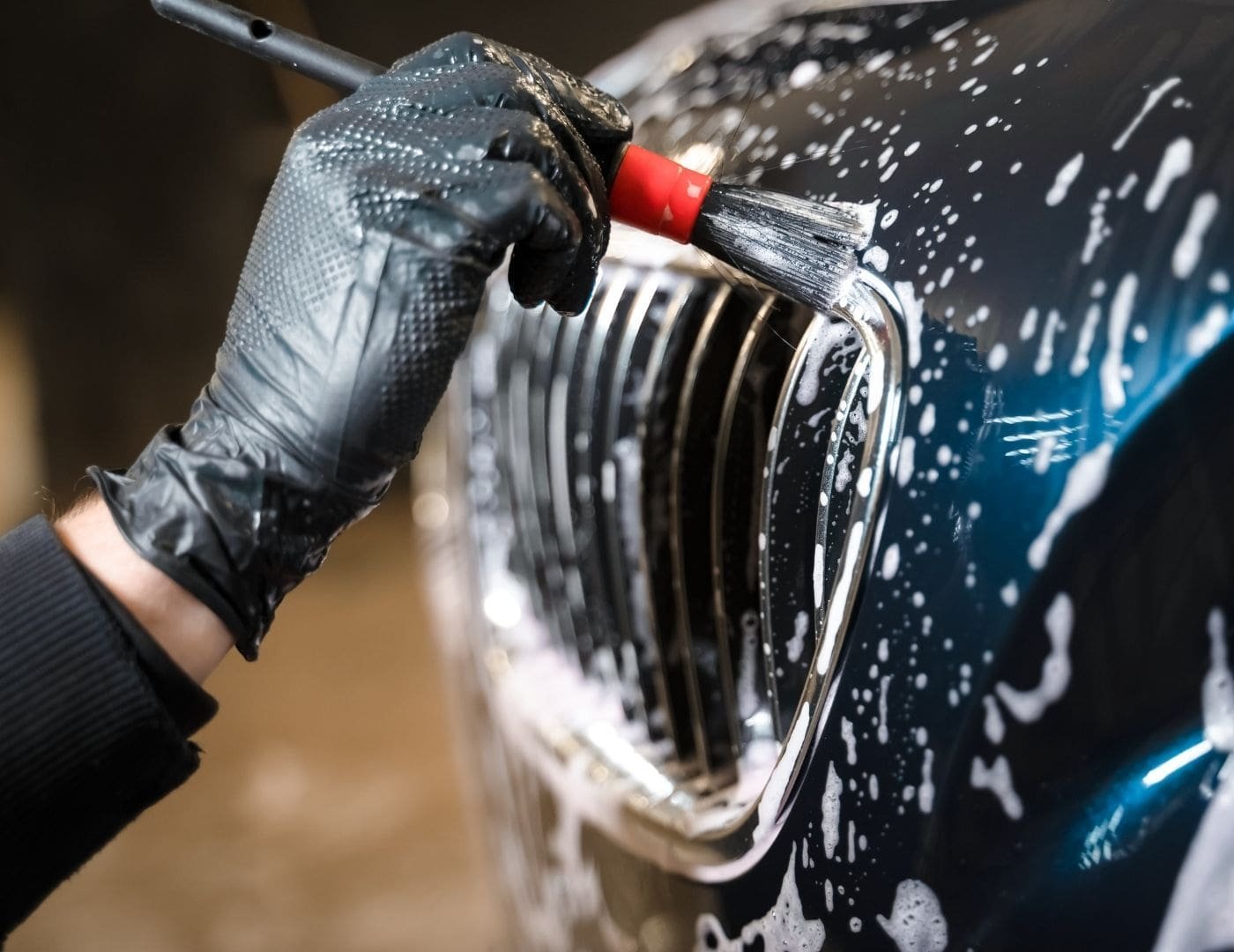
Coffee stains and dull paint got you Googling? Here’s valeting vs detailing—what they mean and which one to book.
Executive Summary (8-Point Practical Guide)
- Core difference: Valeting = clean & refresh; Detailing = correct, enhance & protect (defect removal + long-term protection).
- Quick decision: Just dirty → Full Valet; dull/swirl-marked or you want lasting gloss → Enhancement/Correction Detail.
- Time & cost (typical): Valet 45–180 min / £40–£120; Enhancement 4–6 hrs / £200–£400; Correction+Ceramic 1–2+ days / £500–£1,500+.
- Longevity: Valet = days–weeks; detailing (with coatings) = months–years and makes washing easier.
- Special cases: New car → Protection detail; Selling → Sales-prep Valet/Enhancement; Odours/stains → Valet + interior deep clean; Cloudy headlights → Headlight restoration.
- Best value strategy: Detail once or twice a year (Enhancement or Correction + coating) + Valet every 3–4 weeks.
- Provider checklist: Ask for step-by-step process, product/brand names, before/after of similar cars, timing, aftercare, insurance; avoid one-price-fits-all or “full correction in 2 hrs.”
- Do this today: Inspect paint in sun (swirls? → Enhancement; none? → Full Valet) → choose protection (sealant vs ceramic) → set maintenance (gentle wash routine + annual decon/detail).
Quick Answer: What’s the Main Difference?
Car valeting is like a deep clean for your home—thorough, refreshing, and focused on making everything look presentable. Car detailing is like a complete home renovation—it goes beyond cleaning to restore, protect, and enhance every surface to showroom condition or better.
TL;DR (the 30-second answer)
- Car valeting (common UK term) = thorough cleaning inside and out. It removes dirt, dust, grime, and light contamination.
- Car detailing = cleaning + surface correction + protection. It aims to restore and enhance how the car looks and lasts (e.g., machine polishing, paint decontamination, ceramic coatings).
- If your car is dirty → Valet.
- If your paint looks dull/swirled or you want long-term gloss and protection → Detail.
Why this matters (and how to use this guide)
This guide helps you:
- Name the service you actually need (saves money + time),
- Avoid upsell traps (buy protection when it makes sense), and
- Talk to pros confidently (so you get the result you expect).
|
| |
Valeting |
Detailing |
| Aim |
Clean & refresh |
Correct, enhance & protect |
| Includes |
Safe wash, wheels, dry, interior tidy |
Valet steps + decon, machine polish, protection (wax/sealant/ceramic) |
| Time |
~45–180 min |
~4–16+ hrs (multi-day if heavy) |
| Outcome |
Looks clean, smells fresh |
Higher gloss, fewer swirls, strong beading |
| Lasts |
Days–weeks |
Months–years (with coatings & care) |
| Best for |
Quick, affordable clean |
Long-term finish improvement & durability |
The Decision Map (What should YOU book?)
- Your car is just dirty → Standard or Full Valet.
- Car looks dull or swirl-marked in sunlight → Detailing – Enhancement (1-step).
- You want to “reset” the finish and keep it glossy for ages → Detailing – Correction + Ceramic.
- New car? → New-car protection detail (light polish + ceramic/PPF).
- Selling the car soon? → Sales prep valet (cost-effective freshness).
- Family/pets/spills → Valet with interior shampoo + odour treatment.
- Night-driving visibility down? → Headlight restoration (often under detailing).
Which Service Do You Actually Need?
Choose Car Valeting If:
- ✓ Your car is relatively new or well-maintained
- ✓ You want regular upkeep (every 2-4 weeks)
- ✓ Your car just needs a thorough clean
- ✓ You’re on a moderate budget
- ✓ There are no significant stains, scratches, or damage
- ✓ You want quick turnaround time
Choose Car Detailing If:
- ✓ You’re preparing to sell your car (detailing can increase resale value by hundreds or thousands)
- ✓ You’ve noticed swirl marks, scratches, or dull paint
- ✓ Your car has stubborn stains or persistent odors
- ✓ You want long-term protection (ceramic coatings can last 2-5 years)
- ✓ Your car is older and needs restoration
- ✓ You’ve just bought a used car and want it thoroughly cleaned
- ✓ You want to preserve your car’s value long-term
The Smart Strategy: Combine Both
Here’s what car care professionals actually do: Detail once or twice a year, and valet monthly. This approach gives you:
- The deep restoration and protection of detailing
- The ongoing maintenance of valeting
- The best cost-to-benefit ratio
- A car that always looks showroom-ready
What is Car Valeting?
Car Valeting (often just “Valeting,” especially in the UK) is a thorough, professional-level cleaning of a vehicle’s interior and exterior. It goes well beyond a quick car wash by addressing all visible surfaces to bring the car’s appearance back up to a high, well-maintained standard.
The goal of valeting is cleanliness and presentation, making the car look fresh, tidy, and presentable for everyday driving, a special occasion, or a quick sale.
What Does Car Valeting Include?
A standard car valet service typically covers:
Exterior:
- Full hand wash of the bodywork
- Wheel and tire cleaning
- Window and mirror cleaning
- Drying and basic wax application
- Tire dressing for a fresh look
Interior:
- Vacuuming of carpets, seats, and trunk
- Dashboard and console wiping
- Door panel cleaning
- Basic stain removal on upholstery
- Air freshening
How Long Does Valeting Take?
A standard valet usually takes 1-3 hours depending on your car’s size and condition. Some services offer express valets that can be completed in under an hour.
What Valeting WON’T Do
Here’s the key: valeting maintains your car’s current condition. It won’t:
- Remove deep scratches or swirl marks
- Restore faded paint
- Fix deep-set stains or odors
- Apply protective ceramic coatings
- Correct paint defects
Think of it this way: Valeting is your regular maintenance—the weekly or monthly clean that keeps your car looking good day-to-day.
What is Car Detailing?
Car Detailing takes the service to an entirely new level. It is a meticulous, time-intensive process focused on restoring, enhancing, and protecting the vehicle’s surfaces to achieve a near-showroom or better-than-new condition.
Detailing goes beyond simple cleaning; it involves advanced techniques, specialized tools, and premium products to address defects on paintwork, upholstery, and trim that valeting won’t touch.
💎 Typical Detailing Services Include:
- Everything in a Valet, PLUS:
- Paint Correction (Exterior): This is the biggest difference. It involves using abrasive polishes and electric machines (machine polishing) to remove or significantly reduce clear coat defects like swirl marks, light scratches, oxidation, and holograms.
- Chemical and Mechanical Decontamination: Processes like using a clay bar to physically remove embedded contaminants (industrial fallout, brake dust, tar) from the paint surface, leaving it perfectly smooth.
- Long-Term Protection: Application of high-end paint protection like ceramic coatings (which can last years) or durable paint sealants, providing superior gloss and chemical resistance.
- Deep Restoration (Interior):
- Deep shampooing, steam cleaning, or hot-water extraction to eliminate ground-in dirt, odors, and bacteria from carpets and upholstery.
- Advanced leather cleaning and conditioning to prevent cracking and fading.
- Cleaning of every small crevice, vent, and button with specialty tools.
- Other Enhancements: Headlight restoration, engine bay detailing, brake caliper cleaning, and wheel ceramic coating.
How Long Does Detailing Take?
A full detail typically takes 4-12 hours or even longer for comprehensive services. Some high-end details can span multiple days, with prices ranging from a few hundred to several thousand dollars.
The Detailing Difference
Detailing is about transformation. A skilled detailer can:
- Make a 10-year-old car look nearly new
- Remove years of oxidation and sun damage
- Eliminate scratches you thought were permanent
- Extract odors and stains from previous owners or years of use
- Add protection that keeps your car looking better for longer
Think of it this way: Detailing is your major renovation—the service you get once or twice a year (or before selling) that actually improves your car’s condition.
The Cost Breakdown: What Are You Really Paying For?
Understanding pricing helps you make informed decisions and spot quality services.
Valeting Costs
- Basic Valet: £40-£60 (exterior wash, interior hoover, windows)
- Standard Valet: £60-£90 (everything above plus wheel cleaning, basic wax, dashboard treatment)
- Premium Valet: £90-£120 (most thorough cleaning without restoration)
Detailing Costs
- Basic Detail: £150-£300 (thorough cleaning, light paint enhancement, interior deep clean)
- Standard Detail: £300-£600 (paint correction, ceramic coating, complete interior restoration)
- Premium Detail: £600-£1,500+ (multi-stage correction, high-grade ceramic coating, complete restoration)
Why the price difference? Detailing requires:
- Specialised training (paint correction can take years to master)
- Professional equipment (£4,000-£15,000+ in tools)
- Premium products (ceramic coatings alone can cost £40-£80 per application)
- Significantly more time and labour
- Expertise in paint chemistry and material science
Common Myths Debunked
Myth 1: “Detailing is Just an Expensive Valet”
Reality: Detailing involves paint correction, which actually removes material to eliminate defects. Valeting only cleans the surface. They’re fundamentally different processes.
Myth 2: “I Can Get the Same Results at an Automatic Car Wash”
Reality: Automatic brushes cause the swirl marks that detailers spend hours removing. They’re convenient but damaging over time—especially those old-style rollers at supermarket forecourts.
Myth 3: “New Cars Don’t Need Detailing”
Reality: New cars often have dealer-installed swirl marks from improper washing. A new car detail and ceramic coating can preserve that factory finish for years.
Myth 4: “Valeting is Only a UK Term”
Reality: While “valeting” is more common in the UK, and “detailing” is used more in America, both services exist worldwide. Always ask what’s specifically included regardless of what it’s called.
Myth 5: “Detailing Is Only for Car Enthusiasts”
Reality: Detailing is smart financial planning. A well-maintained car with documented detailing services can command £800-£2,500 more at resale—significant money when part-exchanging or selling privately.
DIY vs. Professional: When to Do It Yourself
You Can DIY Valeting With:
- Quality microfibre towels (never use old tea towels)
- pH-neutral car shampoo
- Two-bucket wash method
- Dedicated glass cleaner
- Hoover with attachments
- Interior cleaning products specific to your materials
Time Investment: 2-4 hours Cost: £40-£120 for initial supplies (then reusable)
Leave Detailing to Professionals Because:
- Paint correction requires a £400+ polisher and years of experience
- One wrong move can burn through clear coat (requiring expensive respraying)
- Ceramic coatings need perfect application (mistakes are extremely difficult to fix)
- Professional extractors are far superior to consumer-grade cleaners
- Insurance: professionals carry liability cover for mistakes
The Exception: Basic detailing tasks like clay bar treatment and sealant application can be learned by dedicated DIYers, but start on an older car or inconspicuous area first.
How to Choose the Right Service Provider
Red Flags to Avoid:
- ❌ No online reviews or portfolio photos
- ❌ Suspiciously cheap prices (quality products and labour cost money)
- ❌ No questions about your car’s condition or needs
- ❌ Can’t explain their process or products used
- ❌ Pressure to add unnecessary services
- ❌ No insurance or proper business registration
Green Flags to Look For:
- ✓ Detailed before-and-after photos in their portfolio
- ✓ Specific product brands mentioned (Gtechniq, Auto Finesse, Koch Chemie, etc.)
- ✓ Certified in specific techniques (approved detailer status)
- ✓ Transparent pricing structure
- ✓ Takes time to assess your car before quoting
- ✓ Offers package customisation
- ✓ Provides maintenance advice
Questions to Ask:
- “What specific paint correction process do you use?” (They should mention stages, compounds, pad types)
- “What ceramic coating brand do you apply?” (Avoid generic “ceramic coating” without brand names)
- “How long have you been detailing professionally?”
- “Do you have insurance for potential damage?”
- “Can I see before-and-after photos of similar cars?”
The Long-Term Value: Investment vs. Expense
Valeting ROI
Regular valeting (£80/month × 12 months = £960/year) maintains:
- Your car’s aesthetic appeal
- Your driving experience
- Basic protection from contaminants
- Potential resale impact: £250-£400 increase
Detailing ROI
Annual detail (£500/year) plus maintenance valeting provides:
- Paint protection lasting years
- Restoration of original condition
- Prevention of permanent damage (oxidation, etching)
- Professional documentation for resale
- Potential resale impact: £800-£2,500+ increase
Real Example: A 5-year-old family saloon typically sells for £12,000 in average condition. The same car with documented professional detailing history and excellent condition can sell for £13,500-£14,000. That’s a 12-17% premium just for proper maintenance—significant when you’re negotiating with a dealer or private buyer.
The Bottom Line: Your Action Plan
Here’s your practical roadmap:
For New or Like-New Cars:
- Get a full detail with ceramic coating immediately (£500-£1,000)
- Valet every 3-4 weeks (£60-£90 each)
- Annual maintenance detail (£250-£400)
For Older Cars Needing Restoration:
- Start with comprehensive detailing (£600-£1,200)
- Transition to monthly valeting once restored
- Touch-up details as needed (every 6-12 months)
For Daily Drivers on a Budget:
- DIY valet every 2-3 weeks
- Professional detail once a year (£300-£500)
- Focus budget on paint correction and protection
Before Selling Your Car:
- Invest in professional detailing (£300-£600)
- Take professional photos immediately after
- Keep detailing receipts to show buyers
- Expect ROI of 2-5x your detailing investment
Regional Considerations for UK Drivers
Weather Impact on Your Choice
British weather presents unique challenges:
- Winter salt and grime: Regular valeting (November-March) prevents corrosion
- Spring pollen: Detailing in April/May removes stubborn pollen that etches paint
- Summer protection: Ceramic coatings protect against UV damage during rare sunny spells
- Autumn leaves: Professional cleaning prevents leaf stain damage
MOT and Service Considerations
A well-detailed car often:
- Makes better first impressions at MOT stations
- Can reveal minor issues before they become MOT failures
- Increases trade-in value at main dealers
- Shows you’re a careful owner when selling privately
Mobile vs. Fixed Location
Mobile valeters/detailers (popular in UK):
- Convenient—they come to your home or workplace
- Often slightly cheaper overhead costs
- Limited by weather conditions
- May have space constraints for larger jobs
Fixed location services:
- Controlled environment for consistent results
- More sophisticated equipment available
- Better facilities for multi-day details
- Often easier to verify reputation and credentials
Final Detail Dash Thoughts
The difference between car valeting and detailing isn’t just about clean versus cleaner—it’s about maintenance versus transformation. Valeting keeps your car looking tidy; detailing makes it look better than it has in years and protects that improvement long-term.
The smartest car owners don’t choose between valeting and detailing—they use both strategically. Regular valeting maintains the foundation, while periodic detailing provides the restoration and protection that actually preserves your car’s value.
Your car is likely one of your largest investments after your home. Treating it with professional care isn’t an expense—it’s asset protection that pays dividends every time someone compliments your motor or offers you top money when it’s time to sell or part-exchange.
Ready to get started? Now that you understand the difference, you can confidently choose the service your car actually needs—and find a provider who delivers real value, not just marketing promises.
What’s your experience with car valeting or detailing? Have questions about which service is right for your specific situation? The best car care approach is always customised to your vehicle’s needs, your budget, and your goals.